Tropical Almond Fruit Tree, Terminalia Catappa
Tropical Almond Fruit Tree, Terminalia Catappa, also known as Pacific almond tree, or Indian almond tree!
The tropical almond tree (Terminalia catappa) is a fast-growing, deciduous tree native to tropical Asia, but it is now widely naturalized in tropical and subtropical regions around the world. It is known for its strikingly symmetrical growth, broad leaves, and edible seeds.
Terminalia Catappa also known as (Pacific almond tree, or Indian almond tree). As a deciduous tree, it reaches 60 feet (or more) in height with horizontally spreading, slightly droopy branches.
The leaves are large (12 by 6 inches), obovate, glossy green and leathery. Moreover, the leaves change to shades of red, yellow or purple in the cool season before falling. New leaves appear quickly. While the flowers are inconspicuous blossoms, borne in terminal clusters about 6 inches long.
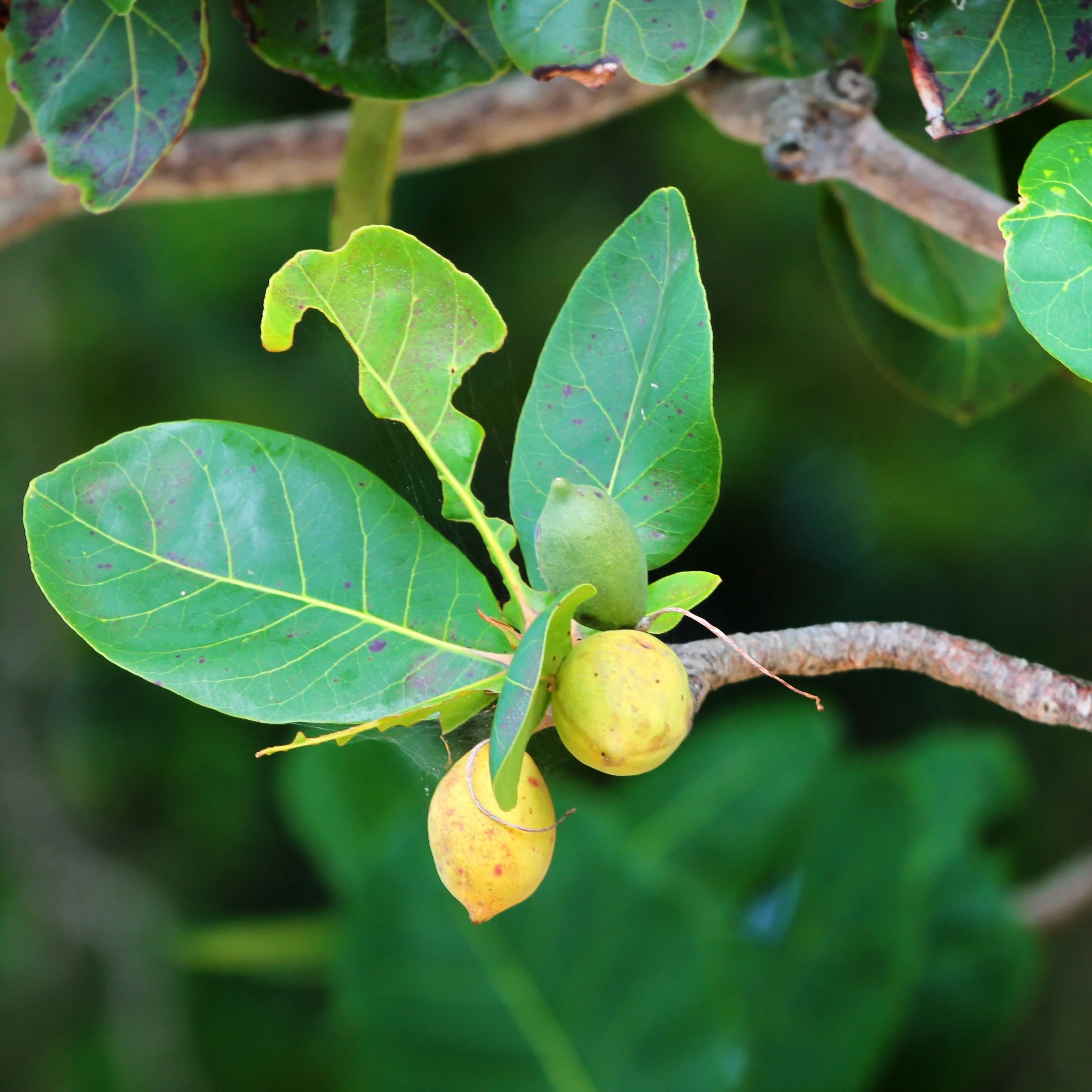
Furthermore, the fruits are oval in shape, 1 to 3 inches long, and tan colored. Also, the fruit is dry and hard with a thin, edible green to purple flesh, and is rich in tannins. Importantly, the large almond-like seed is edible.
Indian almond tree is a striking shade tree with its leaves changing color and unusual crown shape. It is a good light shade tree for gardens or parks; it is best grown in well-draining soils, away from sidewalks and patios as the tannin-rich litter from the leaves and fruits can stain walkways and parked cars.
Key Features:
🌳 Appearance
-
Height: Typically grows (40-60 feet) tall.
-
Shape: Pagoda-like branching pattern, with horizontal branches in tiers.
-
Leaves: Large, leathery, oval-shaped, and turn red, yellow, or purple before falling — a rare autumnal display in the tropics.
-
Flowers: Small, inconspicuous, greenish-white blooms that grow on spikes.
-
Fruit: A flat, oval, green drupe that turns yellow to reddish-purple when ripe. The inner seed is edible and similar in flavor to almonds.
🌍 Habitat
-
Thrives in coastal regions and tolerates saline soils and strong winds.
-
Commonly used for shade, ornamental purposes, and erosion control along beaches and roadsides.
🌰 Uses
-
Edible Seeds: Sometimes called “sea almonds” — can be eaten raw or roasted.
🌱 Ecological Role
-
Provides shade and habitat in coastal areas.
-
Helps prevent coastal erosion with its wide-spreading roots.
Fun Facts:
-
Despite the name, it is not related to the true almond (Prunus dulcis).
-
Leaves are often used in aquaculture, particularly with betta fish and shrimp, due to their tannin content.
-
In many tropical regions, it's planted along streets for aesthetic and cooling benefits.
Tropical Almond Fruit Tree, Terminalia Catappa, also known as Pacific almond tree, or Indian almond tree!
The tropical almond tree (Terminalia catappa) is a fast-growing, deciduous tree native to tropical Asia, but it is now widely naturalized in tropical and subtropical regions around the world. It is known for its strikingly symmetrical growth, broad leaves, and edible seeds.
Terminalia Catappa also known as (Pacific almond tree, or Indian almond tree). As a deciduous tree, it reaches 60 feet (or more) in height with horizontally spreading, slightly droopy branches.
The leaves are large (12 by 6 inches), obovate, glossy green and leathery. Moreover, the leaves change to shades of red, yellow or purple in the cool season before falling. New leaves appear quickly. While the flowers are inconspicuous blossoms, borne in terminal clusters about 6 inches long.
Furthermore, the fruits are oval in shape, 1 to 3 inches long, and tan colored. Also, the fruit is dry and hard with a thin, edible green to purple flesh, and is rich in tannins. Importantly, the large almond-like seed is edible.
Indian almond tree is a striking shade tree with its leaves changing color and unusual crown shape. It is a good light shade tree for gardens or parks; it is best grown in well-draining soils, away from sidewalks and patios as the tannin-rich litter from the leaves and fruits can stain walkways and parked cars.
Key Features:
🌳 Appearance
-
Height: Typically grows (40-60 feet) tall.
-
Shape: Pagoda-like branching pattern, with horizontal branches in tiers.
-
Leaves: Large, leathery, oval-shaped, and turn red, yellow, or purple before falling — a rare autumnal display in the tropics.
-
Flowers: Small, inconspicuous, greenish-white blooms that grow on spikes.
-
Fruit: A flat, oval, green drupe that turns yellow to reddish-purple when ripe. The inner seed is edible and similar in flavor to almonds.
🌍 Habitat
-
Thrives in coastal regions and tolerates saline soils and strong winds.
-
Commonly used for shade, ornamental purposes, and erosion control along beaches and roadsides.
🌰 Uses
-
Edible Seeds: Sometimes called “sea almonds” — can be eaten raw or roasted.
🌱 Ecological Role
-
Provides shade and habitat in coastal areas.
-
Helps prevent coastal erosion with its wide-spreading roots.
Fun Facts:
-
Despite the name, it is not related to the true almond (Prunus dulcis).
-
Leaves are often used in aquaculture, particularly with betta fish and shrimp, due to their tannin content.
-
In many tropical regions, it's planted along streets for aesthetic and cooling benefits.
Original: $129.00
-70%$129.00
$38.70Description
Tropical Almond Fruit Tree, Terminalia Catappa, also known as Pacific almond tree, or Indian almond tree!
The tropical almond tree (Terminalia catappa) is a fast-growing, deciduous tree native to tropical Asia, but it is now widely naturalized in tropical and subtropical regions around the world. It is known for its strikingly symmetrical growth, broad leaves, and edible seeds.
Terminalia Catappa also known as (Pacific almond tree, or Indian almond tree). As a deciduous tree, it reaches 60 feet (or more) in height with horizontally spreading, slightly droopy branches.
The leaves are large (12 by 6 inches), obovate, glossy green and leathery. Moreover, the leaves change to shades of red, yellow or purple in the cool season before falling. New leaves appear quickly. While the flowers are inconspicuous blossoms, borne in terminal clusters about 6 inches long.
Furthermore, the fruits are oval in shape, 1 to 3 inches long, and tan colored. Also, the fruit is dry and hard with a thin, edible green to purple flesh, and is rich in tannins. Importantly, the large almond-like seed is edible.
Indian almond tree is a striking shade tree with its leaves changing color and unusual crown shape. It is a good light shade tree for gardens or parks; it is best grown in well-draining soils, away from sidewalks and patios as the tannin-rich litter from the leaves and fruits can stain walkways and parked cars.
Key Features:
🌳 Appearance
-
Height: Typically grows (40-60 feet) tall.
-
Shape: Pagoda-like branching pattern, with horizontal branches in tiers.
-
Leaves: Large, leathery, oval-shaped, and turn red, yellow, or purple before falling — a rare autumnal display in the tropics.
-
Flowers: Small, inconspicuous, greenish-white blooms that grow on spikes.
-
Fruit: A flat, oval, green drupe that turns yellow to reddish-purple when ripe. The inner seed is edible and similar in flavor to almonds.
🌍 Habitat
-
Thrives in coastal regions and tolerates saline soils and strong winds.
-
Commonly used for shade, ornamental purposes, and erosion control along beaches and roadsides.
🌰 Uses
-
Edible Seeds: Sometimes called “sea almonds” — can be eaten raw or roasted.
🌱 Ecological Role
-
Provides shade and habitat in coastal areas.
-
Helps prevent coastal erosion with its wide-spreading roots.
Fun Facts:
-
Despite the name, it is not related to the true almond (Prunus dulcis).
-
Leaves are often used in aquaculture, particularly with betta fish and shrimp, due to their tannin content.
-
In many tropical regions, it's planted along streets for aesthetic and cooling benefits.